June 23, 2026
/
Not all restaurant segments move in the same direction at the same speed. While some categories have struggled to rebuild post-pandemic traffic and revenue, fast-casual has continued to pull ahead. Understanding why the category keeps outperforming is not simply academic. It is the context that explains why some franchise systems are growing while others are stagnating.
For franchise investors paying attention to category performance, the data points in one direction.
Fast-Casual Continues to Outpace Traditional QSR Growth
The gap between fast-casual and traditional quick service has become measurable and consistent. According to Nation’s Restaurant News reporting on the 2026 Technomic Top 500 Chain Restaurant Report, fast-casual chain sales increased 6% in 2025, reaching nearly $77 billion. Traditional quick-service restaurant sales grew by just 2.4% over the same period.
Traffic data reinforces the trend. Placer.ai reported stronger visit performance for fast-casual concepts relative to QSR throughout 2025, suggesting the category’s growth reflects genuine consumer demand rather than menu price inflation alone.
Choosing the right category is as important as choosing the right brand. A concept operating in a growing segment benefits from broader consumer tailwinds. One operating in a declining or flat segment works against them.
Consumer Preferences Have Shifted Toward the Fast-Casual Model
Fast-casual grew because it aligned with how consumers increasingly prefer to order and eat. Speed, customization, quality ingredients, and digital ordering convenience are not passing trends. They reflect structural shifts in consumer behavior.
Off-premises dining accelerated sharply during the pandemic and has not reversed course. The Guardian reported in March 2025, citing National Restaurant Association data, that fast-casual restaurants have continued to grow as consumers increasingly favor takeout, delivery, and convenience-oriented dining models. The category was already well-positioned before the pandemic, and the years since have only reinforced that advantage.
Build-your-own formats serve this shift directly. Guests who control their order, select their proteins and toppings, and customize their meal tend to spend more and return more often. That behavior supports both higher average tickets and stronger customer retention.
The Mexican Segment Remains One of the Strongest Categories in Foodservice
Within fast-casual, not all categories grow at the same rate. The Mexican segment has consistently ranked among the top performers.
According to the 2025 Technomic Top 500 Chain Restaurant Report, as published by Nation’s Restaurant News, limited-service Mexican chains grew sales 9% in 2024, outpacing the pizza segment and most other major categories. That growth rate stood out in a year when overall Top 500 chain sales grew just 3.1%, the slowest pace in a decade outside of 2020.
The Mexican category’s strength is not coincidental. It benefits from the same forces driving fast-casual broadly: customizable formats, bold flavor profiles, broad demographic appeal, and a menu architecture that supports both dine-in and off-premises consumption. Within this context, Mexican fast-casual represents one of the more durable investment categories in the segment.
Digital Ordering and Loyalty Infrastructure Are Separating Growing Brands from the Rest
Across the restaurant industry, digital infrastructure has become a meaningful differentiator. Brands with robust mobile ordering platforms, loyalty programs, and customer data systems are outperforming those without them.
The mechanics are straightforward. Mobile ordering increases ticket size through add-on prompts and order accuracy. Loyalty programs drive repeat visits through targeted incentives. Customer data allows brands to personalize outreach, reduce promotional waste, and identify high-value guests to retain.
Bubbakoo’s has built this infrastructure into its operating model. Approximately 50% of orders are placed through digital channels. The brand’s loyalty platform, powered by Thanx and supported by Bikky guest analytics and Toast POS technology, helps create detailed customer profiles that support more targeted marketing and customer engagement.
This technology infrastructure is already producing measurable results. More than half of Bubbakoo’s repeat customers return within 90 days, and the brand continues to leverage customer data to strengthen loyalty and encourage repeat visits. Rather than building toward a future digital strategy, Bubbakoo’s is already operating within one.
Bubbakoo’s Is Positioned to Benefit from the Trends Driving Fast-Casual Growth
A brand does not automatically benefit from favorable category trends. It has to be built in a way that captures them. Bubbakoo’s does just that.
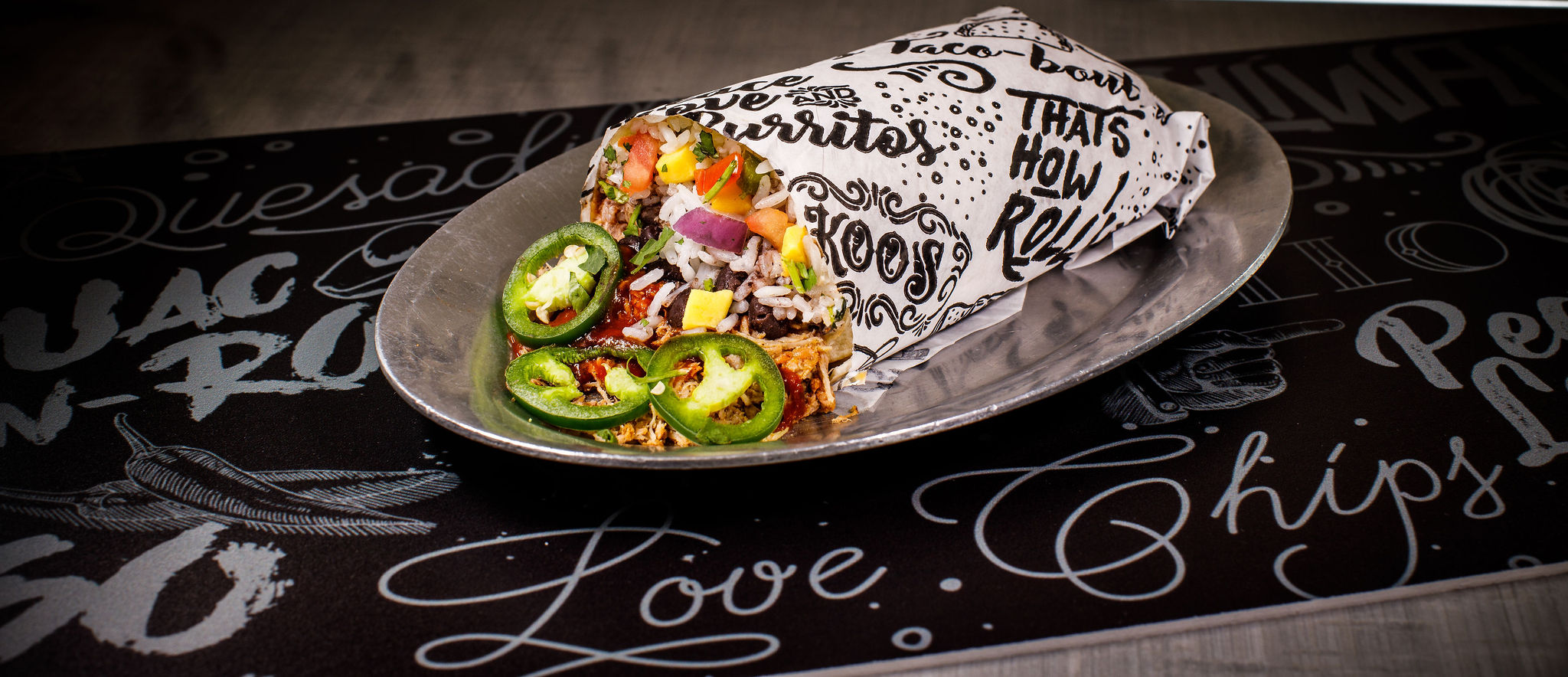
The menu leads with full customization across burritos, bowls, tacos, quesadillas, and fusion-forward items including hibachi steak, General Tso’s chicken, and Nashville Hot chicken. The Chiwawa and the Burritodilla represent a culinary point of view that national competitors do not replicate. CEO Chris Ives has noted that menu differentiation is a strategic priority: “We have proteins that competitors don’t make.”
Bubbakoo’s has demonstrated substantial system growth over the past several years, expanding from approximately 30 locations in 2019 to more than 140 locations across 17+ states today. The brand also reports more than 50 additional units in development. In June 2025, private equity firm Thompson Street Capital Partners acquired the company, signaling institutional confidence in the brand’s long-term growth potential and providing additional capital to support investments in technology, infrastructure, franchisee support, and brand development.
The brand’s development strategy focuses on experienced multi-unit operators who plan to open three or more locations, though single-unit opportunities are considered for the right candidate and market. Development opportunities remain available across much of the United States, though these opportunities narrow as the system continues to expand.
What This Means for Franchise Investors
Fast-casual is outperforming traditional QSR by a meaningful margin, and the Mexican category is outperforming much of the fast-casual segment. Digital infrastructure is increasingly separating brands with momentum from those without it. And the off-premises shift that accelerated during the pandemic appears to have become a permanent feature of how consumers eat.
Bubbakoo’s Burritos sits at the intersection of all of these trends: a fast-casual Mexican concept with a differentiated fusion menu, a mature digital operating model, an expanding system, and available territory in a category showing consistent growth. For investors evaluating the opportunity, those facts provide a useful foundation.
To learn more about Bubbakoo’s Burritos, visit the franchise website and download the Franchise Information Guide.
Sources
Nation’s Restaurant News, “The Top 500 Fast-Casual Restaurant Chains That Won in 2025,” April 24, 2026.
Nation’s Restaurant News, “Meet the 2025 Top 500: The Biggest Restaurant Chains in America,” June 12, 2025.
Placer.ai, “How Limited Service Is Succeeding in 2025.”
The Guardian, “Restaurant Food, Covid Pandemic Impact,” March 19, 2025.